Home

Independent instrument service for MassARRAY systems

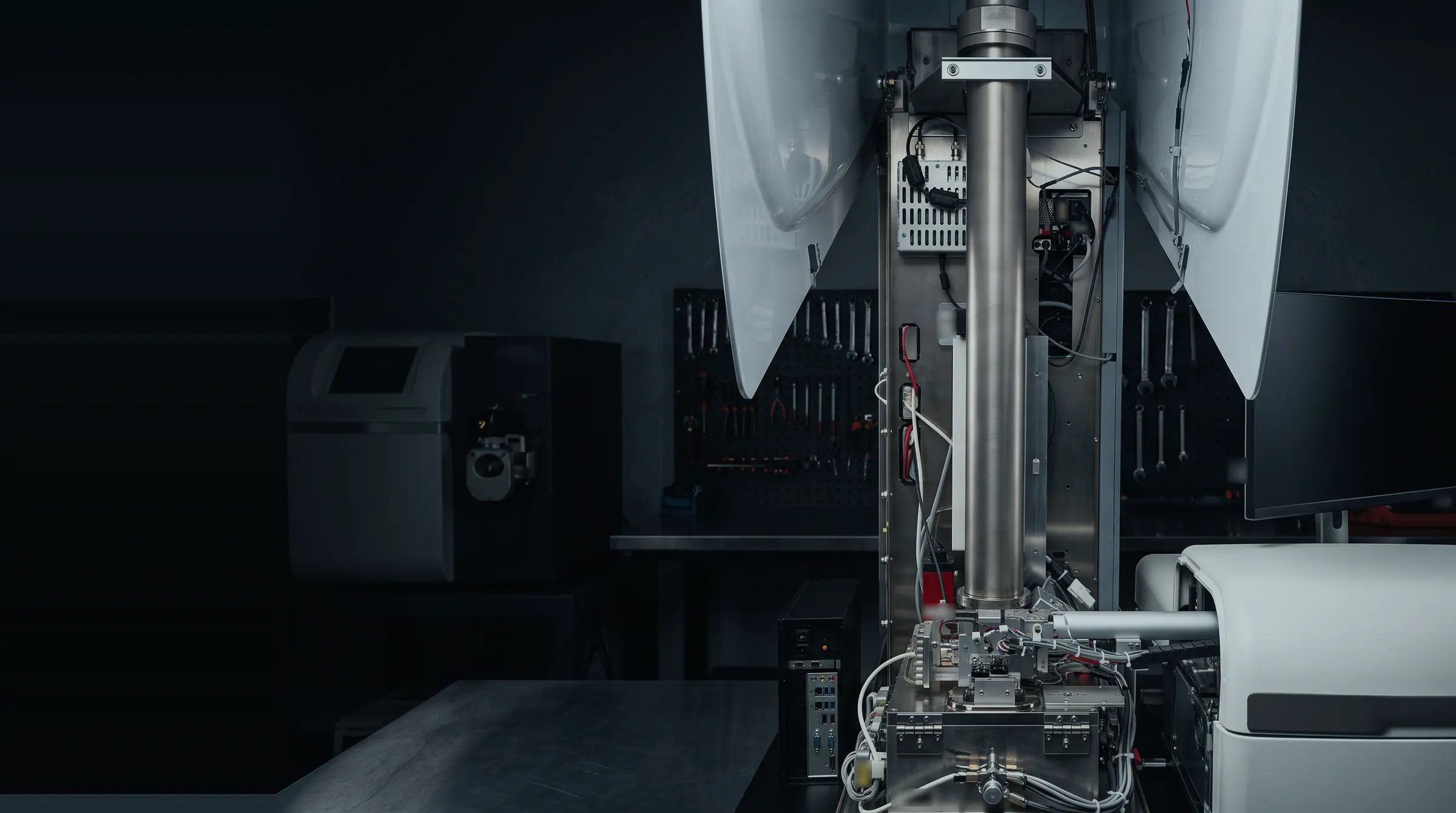
An instrument with its tower covers open, showing a metal tube and wiring, in a dark workshop.

Repair and installation

Repair and installation

How repair and service work here: pick a service, triage, quotation and go-ahead, and returns.

Checked on 24 November 2026

Covers stay closed. Work inside an instrument is for a qualified service engineer only. Safety statement

On this page

Which service do I need?

How service works here: triage, quotation and go-ahead, work, verification, and a written record. Start with the service selector.

Pick the situation closest to yours. The pages that help appear beside it.

Everything below is free to read and use. Checklists run in your browser and send nothing.

Which service do I need?
Next step

Choose the situation that fits and the pages that help appear here.

How service works

Six stages, each with a record. This is the process on every job.

  1. Step 1: Request

    Describe the instrument and the problem in the request form. Leave out patient, sample and personal data.
  2. Step 2: Triage

    You receive a reference number. Remote triage sorts the problem into an operator-level check, a laboratory-side cause, a visit or a return.
  3. Step 3: Quotation and go-ahead

    You receive a written quotation. Nothing starts until you give your go-ahead.
  4. Step 4: Work

    An engineer carries out the work, with your named representative present, from your documents and our safety rules.
  5. Step 5: Verification

    Checks are run and recorded against acceptance criteria that you set. We record results; we do not judge them.
  6. Step 6: Report and records

    A written service report and the records pack come back to you for your own change control.

We describe service as a process and do not list the faults we can repair. Work inside an instrument is for a qualified service engineer only, and we never advise opening covers.

What the manufacturer publishes

In the public pages we checked on 24 November 2026, we could not find a pre-installation guide, an installation checklist, a qualification protocol, a service manual or a parts list.[1] The manufacturer’s own two service plans name preventive maintenance, performance verification kits and qualification services without defining them[2].

This is why our checklists leave requirement columns for you to fill from your own manufacturer documents. We do not supply those documents. Manufacturer manuals are available through the manufacturer’s customer portal.

Service lines

The service lines on offer, what each involves as a process, and what we need from you before any visit.

What every job has in common

Whatever the line, a job follows the same record-keeping and safety rules.

  • Before a visit or return

    A signed decontamination declaration, a named customer representative, and a backup of your data. The manufacturer requires written notice of decontamination and a customer representative on site for its own visits[3]; we ask for the same.

  • Your side of the work

    The manufacturer’s warranty names periodic maintenance and calibration, replacing items such as dispense pins and liquid-handler tips, data backup, networking and waste disposal as customer responsibilities[4].

  • What you get back

    A written service report and the records for your own change control. A report records what was done and measured.

Lines on offer

A line is described here only when it is on offer. Where a line works from documents you hold, we work only from protocols and documents the customer supplies and holds lawfully.

Installation

Scoping, documentation collection, site-readiness sign-off, delivery inspection, installation by a qualified engineer, power-up and software configuration, and functional checks recorded against your manufacturer's documents.

What you provide

  • The manufacturer documents you hold lawfully
  • A completed site-readiness checklist
  • A named customer representative
  • A signed decontamination declaration for any unit that has been used

What you receive

  • An installation record
  • An IQ record with the reference of the document the checks came from
  • A written service report
Installationscope

Installation planning and execution with you, working from the manufacturer's documents and your protocol, with a written record.

Regions: United States, Germany Lead time: Confirmed at triage.

Qualification records

Execution and documentation of IQ and OQ tasks against your protocol or documents you supply. PQ is your laboratory's own validation work; we can record the runs you perform.

What you provide

  • Your qualification protocol and acceptance criteria
  • Access to the instrument and the instrument PC

What you receive

  • Completed qualification records
  • An evidence index listing where each record is held
Qualification recordsscope

Running and recording installation and operational qualification tasks against your protocol or the documents you supply. You set the acceptance criteria.

Regions: United States, Germany Lead time: Confirmed at triage.

Calibration

Calibration tasks from your manufacturer's document are carried out by an engineer and every value is recorded. We do not set limits.

What you provide

  • The document and the limits it gives
  • A named customer representative

What you receive

  • A record of each task and the values recorded
Calibrationscope

Calibration tasks carried out to documented procedures, with results recorded. Acceptance limits are the ones you set or the manufacturer states.

Regions: United States, Germany Lead time: Confirmed at triage.

Preventive maintenance

Engineer-side tasks from your manufacturer's maintenance document are carried out and logged. Customer-side tasks stay with your team.

What you provide

  • The maintenance document and its intervals
  • Your maintenance log

What you receive

  • A maintenance visit report
  • Entries for your maintenance log
Preventive maintenancescope

Scheduled maintenance to a documented schedule, with each visit entered in a maintenance log.

We work only from protocols and documents the customer supplies and holds lawfully; we do not supply manufacturer protocols.

Regions: United States, Germany Lead time: Confirmed at triage.

Remote triage

Remote triage classifies the problem as an operator-level check, a laboratory-side cause, or a case for a visit or a return. No one is guided into opening a cover.

What you provide

  • A completed fault report sheet
  • The exact message text, without sample or patient identifiers

What you receive

  • A written triage summary and the next step
Remote triagescope

Remote classification of a reported fault from your description and records, with the next steps in writing.

Regions: United States, Germany Lead time: Confirmed at triage.

On-site visit

A qualified engineer attends. Before the visit we need a signed decontamination declaration, and your representative stays on site throughout.

What you provide

  • A signed declaration
  • A named customer representative
  • Site access arrangements

What you receive

  • A written service report
  • Verification results recorded against your criteria
On-site visitscope

On-site fault investigation and repair work after your written go-ahead, closed with a service report.

Regions: United States, Germany Lead time: Confirmed at triage.

Depot return

The unit comes to us under a return reference with a signed declaration attached outside the package. It is inspected on receipt, quoted, repaired and tested, then returned.

What you provide

  • A signed declaration
  • Packing as specified by the engineer
  • Insured transport

What you receive

  • A receipt inspection record with photographs
  • A written service report
Depot returnscope

Repair at our depot after a return is agreed and a decontamination declaration is received, closed with a service report.

Regions: United States, Germany Lead time: Confirmed at triage.

Move an instrument

A staged plan: consultation, declaration, backup, de-installation by an engineer, insured transport, re-installation and a re-qualification scope for your change control.

What you provide

  • A signed declaration
  • A backup of your data and configuration
  • Your destination room readiness

What you receive

  • A move record
  • A service report for each visit
Move an instrumentscope

Planning and support for moving an instrument, with checks recorded before and after the move.

We work only from protocols and documents the customer supplies and holds lawfully; we do not supply manufacturer protocols.

Regions: United States, Germany Lead time: Confirmed at triage.

Verification after service

After service, verification runs are executed and recorded against acceptance criteria that you set.

What you provide

  • Your verification protocol and acceptance criteria

What you receive

  • A verification record with the results as recorded
Verification after servicescope

Checks after repair against acceptance criteria that you set, recorded in the service report.

Regions: United States, Germany Lead time: Confirmed at triage.

Used-instrument inspection

A used unit is inspected against a checklist and photographed. The result is a condition record, not an assurance of fitness for any use.

What you provide

  • The seller's documents
  • Safe access to the unit

What you receive

  • An inspection record with photographs
Used-instrument inspectionscope

Review of the condition and records of a used instrument before you buy it. It is not a warranty or a guarantee.

Regions: United States, Germany Lead time: Confirmed at triage.

Operator refresher

A refresher on the routine tasks the manufacturer assigns to the customer, given from your manufacturer's documents.

What you provide

  • The manufacturer's guide
  • The people to be refreshed

What you receive

  • A training record
Operator refresherscope

Refresher sessions for operators on routine tasks, based on your own standard operating procedures.

Regions: United States, Germany Lead time: Confirmed at triage.

Decommissioning

A plan to retire an instrument with its paperwork: declaration, backup, de-installation by an engineer, transport coordination and a final record.

What you provide

  • A signed declaration
  • Your decisions on data retention and disposal

What you receive

  • A decommissioning record
  • A final service report
Decommissioningscope

Planning and records for retiring an instrument, including the decontamination declaration.

Regions: United States, Germany Lead time: Confirmed at triage.

Software and PC support

Planning, backup and records for changes to the instrument PC and its operating system. License questions go to the manufacturer.

What you provide

  • Software and operating-system names and versions
  • Your backup

What you receive

  • A completed change checklist and a change record
Software and PC supportscope

Help with the instrument computer and software environment, within the licences you hold.

Regions: United States, Germany Lead time: Confirmed at triage.

What we do not do

  • We do not sell reagents, chips or compatible consumables.
  • We do not reuse or refurbish SpectroCHIP arrays and we never advise it. The manufacturer’s warranty excludes reused or refurbished chips[7].
  • We do not modify instruments. Servicing returns a device to its maker’s specifications; remanufacturing changes it, and regulators judge by what is done[8].
  • We do not set acceptance criteria, and we do not declare an instrument validated or fit for clinical use. We execute and document qualification tasks against your protocol or documents you supply.
  • We do not reproduce manufacturer manuals, procedures or message codes.

Your manufacturer plan

Plans and our service are separate things.

The manufacturer sells service plans of its own. One tier lists preventive maintenance and on-site applications support; the higher tier adds training, performance verification kits and qualification services, and the page defines none of these terms[2]. If you hold a plan, read it before you book anyone else.

Where and when

Our service area and hours.

Service area
United States and Germany
Hours
We operate 24/7, for online requests and email. This is not a promised response time.

Before you write

Four things shorten triage more than anything else.

  1. A decontamination declaration. The manufacturer requires the customer to tell it in writing about any decontamination before a service visit, and a customer representative must be on site throughout an on-site visit[3]. We ask for the same before any visit or return.
  2. Your warranty and plan status. Hardware warranty runs to the earlier of one year from installation or sixteen months from shipment, and covers only the original purchaser unless the manufacturer agrees in writing[5]. Work by others, including moving the system, can be a coverage exclusion[6]. Read your own agreement.
  3. Serial numbers as printed on the rating label of each unit, and the model names as printed.
  4. The exact message text, copied as shown, without sample or patient identifiers.

Repair request and triage

What to have ready before you write, how a fault is classified, and when to stop and make the area safe.

What happens between “it broke” and “it works”

Ten steps. You decide at the go-ahead; nothing is done before it.

Repair triage flowTen steps in two lanes. You stop and make the area safe if a stop condition applies, submit the request, and receive a reference. We triage remotely, classify, quote, and wait for your go-ahead before work, verification and a written report.YouUsOuter ring: hold point, work waits here1Stop and make the area safe if astop condition applies2Submit the request3Reference number andacknowledgement4Remote triage5Classify: operator-level check,lab-side cause, visit or depotreturn6Quotation7Your go-ahead8Work by a qualified engineer9Verification10Written report and records
Shape marks who acts. Outer ring marks a hold point.
  1. You: Stop and make the area safe if a stop condition applies (hold point)
  2. You: Submit the request
  3. Us: Reference number and acknowledgement
  4. Us: Remote triage
  5. Us: Classify: operator-level check, lab-side cause, visit or depot return
  6. Us: Quotation
  7. You: Your go-ahead (hold point)
  8. Us: Work by a qualified engineer
  9. Us: Verification
  10. Us: Written report and records

How a request is classified

Triage sorts a problem into four groups: an operator-level check, a cause on the laboratory side, a visit by an engineer, or a return. Many wrong-result causes sit in samples and chemistry rather than in the instrument; one core facility lists poor DNA quality, too little DNA, too high a plex and variation near the SNP among them[9]. One core facility's rule

The manufacturer assigns routine hardware consumables, backup, networking and waste to the customer[4]. Where that is the cause, we say so and point you to your manufacturer’s guide.

After service, one vendor’s published pattern repeats operational qualification, and repeats performance qualification after a qualified major repair[10]. The manufacturer’s higher plan tier names qualification services without defining them[2]. We record the verification you ask for and leave the judgement to you.

For the manufacturer’s own visits, a customer representative must be on site throughout and decontamination must be notified in writing in advance[3]. We follow the same practice. If you hold a manufacturer plan, read its terms before you book anyone else.

Have these ready

Tick what you have, choose the closest description of the problem, and open the request form.

What do you have ready?

Tick items as you gather them. This list stays in your browser tab; it is not sent anywhere.

0 of 10 ready

What we will not do

  • Clear a problem by guesswork or by trying things on the instrument.
  • Give advice that involves opening a cover or reaching inside an instrument.
  • Quote a fix before we have your facts, or promise that a visit will resolve a problem.
  • Handle any unit before the decontamination declaration is signed and checked.

Look first

The diagnostics section says who can act on a symptom and what to have ready. The safety-stop steps are there too.

Remote triagescope

Remote classification of a reported fault from your description and records, with the next steps in writing.

Regions: United States, Germany Lead time: Confirmed at triage.

On-site visitscope

On-site fault investigation and repair work after your written go-ahead, closed with a service report.

Regions: United States, Germany Lead time: Confirmed at triage.

Turnaround and returns

How a return works, what we ask for first, and the decontamination hold point before any unit is handled.

Before you send anything

Two checks come first, because a return by the wrong route can cost you cover.

  1. Is the unit under a manufacturer warranty or plan? If so, contact the manufacturer first. The manufacturer’s warranty says no product or component may be returned to it without its prior consent[3], and excludes systems repaired or moved by others[6]. Read your own agreement.
  2. Can the declaration be signed? We do not accept units exposed to BSL-3 or BSL-4 agents or radioactive material. The manufacturer excludes them from warranty too[7].

How a return works

Eleven steps. Your go-ahead comes after the quotation and before any repair.

Return flowEleven steps in two lanes: you request and receive a return reference; you attach a signed declaration outside the package, pack as specified, and ship with insurance; we inspect on receipt with photographs, quote, wait for your go-ahead, repair and test, return the unit and send a report.YouUsOuter ring: hold point, work waits here1Request2RMA number issued3Signed decontaminationdeclaration attached outside thepackage4Packing as specified by theengineer5Insured transport6Receipt inspection withphotographs; declaration checked7Quotation8Your go-ahead9Repair and test10Return shipment11Report
Shape marks who acts. Outer ring marks a hold point.
  1. You: Request
  2. Us: RMA number issued
  3. You: Signed decontamination declaration attached outside the package (hold point)
  4. You: Packing as specified by the engineer
  5. You: Insured transport
  6. Us: Receipt inspection with photographs; declaration checked (hold point)
  7. Us: Quotation
  8. You: Your go-ahead (hold point)
  9. Us: Repair and test
  10. Us: Return shipment
  11. Us: Report

No reagents, chips or biological material go in the shipment.

Other instrument companies ask for a decontamination declaration with some returns, a reference number, the condition of the item and a detailed fault description[11]. We ask for all four.

The declaration travels outside the package, so that nobody has to open a package to find out whether it is safe to open. Packing is as specified by the engineer, and we ask for insured transport. When the unit arrives, the engineer checks the declaration against the visible condition of the unit and photographs what they see.

You receive a quotation. Nothing is repaired until you give your go-ahead. The service report that follows records what was done and measured.

The hold point

Prepare the decontamination declaration

Fill it in here, print it, sign the printed copy and attach it outside the package. Nothing is sent from this page.

Materials handled (categories only)

Do not enter sample or patient identifiers.

Without this statement we cannot accept the unit. Speak to your biosafety officer before you contact us.

Packing label text
RETURN: INSTRUMENT FOR SERVICE
Reference: (add the RMA number)
Model:   Serial: 
Signed decontamination declaration attached OUTSIDE the package.
No reagents, chips or biological material inside.
Packing as specified by the engineer.

Complete the model, serial number, method, the exposure statement, the signatory name and the date to enable printing.

Nothing on this form is sent, stored or uploaded.

Lead times, parts and quotation

Lead time by line
LineLead time
Remote triageConfirmed at triage.
On-site visitConfirmed at triage.
Depot returnConfirmed at triage.
Verification after serviceConfirmed at triage.

Start a return by describing the unit and the problem. A return reference follows. Request service

Continues on Records, maintenance and questions: service reports, preventive maintenance, PC and operating-system changes and the FAQ.

Notices

Research-use context. No diagnostic or clinical claims. Read the research-use notice

We do not reproduce manufacturer manuals, procedures or error codes. Ask the manufacturer or use your customer portal.

Ready to ask?

Describe the instrument and what you need. Leave out patient and sample data.

Request service

Sources

  1. [1]
    INS-01

    We could not find a pre-installation guide, installation checklist, IQ/OQ protocol, service manual or parts list in the Agena support and resource pages we checked on 24 November 2026; what is there is warranty terms, two service plans and support routes. Physical and electrical figures for the Analyzer 4 appear only in third-party listings.

    Agena Bioscience: Support; Agena Bioscience: Product Literature, agenabio.com/support/

    Checked on 24 November 2026Derivedmedium confidence

  2. [2]
    SUP-01

    Agena's service-plan page lists an Essential tier (preventive maintenance, on-site applications support, fast response) and a Plus tier that adds applications training, monthly performance verification kits, next-day response and qualification services. Both cover the system and the Chip Prep Module; no prices, hours or definitions are given.

    Agena Bioscience: Service Plans, agenabio.com/support/service-plans/

    Checked on 24 November 2026Manufacturer-reportedmedium confidence

  3. [3]
    WAR-05

    Before a service visit the customer must tell Agena in writing about any decontamination of the system, a customer representative must be on site throughout on-site service, and no product or component may be returned without Agena's prior consent.

    Agena Bioscience: System Warranty, agenabio.com/support/system-warranty/

    Checked on 24 November 2026Manufacturer-reportedmedium confidence

  4. [4]
    WAR-03

    The warranty page makes these customer responsibilities: periodic maintenance and calibration, replacing hardware components such as dispense pins, liquid-handler tips and clean resin tools, data backup, networking and waste disposal. Lasers are excepted, so laser replacement is not a customer task.

    Agena Bioscience: System Warranty, agenabio.com/support/system-warranty/

    Checked on 24 November 2026Manufacturer-reportedmedium confidence

  5. [5]
    WAR-01

    Agena's system warranty covers hardware and installed software until the earlier of one year from installation or sixteen months from shipment. Consumables are covered from delivery to the expiry date on the packaging, and coverage extends only to the original purchaser unless Agena agrees in writing.

    Agena Bioscience: System Warranty, agenabio.com/support/system-warranty/

    Checked on 24 November 2026Manufacturer-reportedmedium confidence

  6. [6]
    WAR-02

    The warranty page excludes a system that is repaired, modified, altered, assembled, disassembled or moved from its original installation location by anyone other than Agena or a service provider the page leaves undefined. It is a coverage exclusion, so customers should check their own agreement.

    Agena Bioscience: System Warranty, agenabio.com/support/system-warranty/

    Checked on 24 November 2026Manufacturer-reported

  7. [7]
    WAR-04

    The warranty excludes reused or refurbished chips (SpectroCHIP Arrays are named), third-party hardware or software Agena has not accepted in writing, exposure to BSL-3/4 agents or radioactivity, malicious software, and acts of God.

    Agena Bioscience: System Warranty, agenabio.com/support/system-warranty/

    Checked on 24 November 2026Manufacturer-reportedmedium confidence

  8. [8]
    LAB-01

    FDA separates servicing (repair or routine maintenance that returns a device to the maker's specifications and intended use) from remanufacturing (acts that significantly change performance, safety specifications or intended use), judging by what is actually done rather than what an entity calls itself.

    Remanufacturing and Servicing of Medical Devices (FDA) (external)

    Checked on 24 November 2026Regulator

  9. [9]
    DIA-01

    Per one core facility, causes of poor genotyping include salty buffer (TE), DNA that is too dilute or too concentrated, poor purity, below about 1 ng entering the assay, polymorphism within 20 bp of the SNP, and too high a plex. A published study also suggests primer-binding-site variation as the cause of one assay failing in nearly all isolates.

    SNP genotyping by MassARRAY (university genetics core resource page); S. aureus MassARRAY genotyping study (PubMed Central PMC7471782), cores.arizona.edu/facilities/azgc/resources/snp-genotyping-mass-array

    Checked on 24 November 2026Third partylow confidence

  10. [10]
    LAB-17

    Another instrument vendor's public qualification pattern: IQ confirms installation to specification and safety rules, OQ confirms operation within operating specifications, and PQ follows a qualified major repair. IQ is repeated at install, after relocation and reinstallation and after environment change; OQ after reactive service, software upgrade or preventive maintenance.

    Instrument qualification services page (another instrument vendor), Other-vendor public page

    Checked on 24 November 2026Third partymedium confidence

  11. [11]
    LAB-18

    Relocation and return patterns at other instrument companies: one describes relocation in four stages (pre-move consultation, insured transport, de-installation and re-installation by engineers, testing and calibration) and is silent on decontamination; another requires a decontamination declaration form with some returns, a reference number, item condition and a detailed fault description.

    How easy is it to relocate a mass spectrometer? (vendor community blog, 1 June 2017); goods-return page (another instrument vendor), Other-vendor public page

    Checked on 24 November 2026Third partymedium confidence